
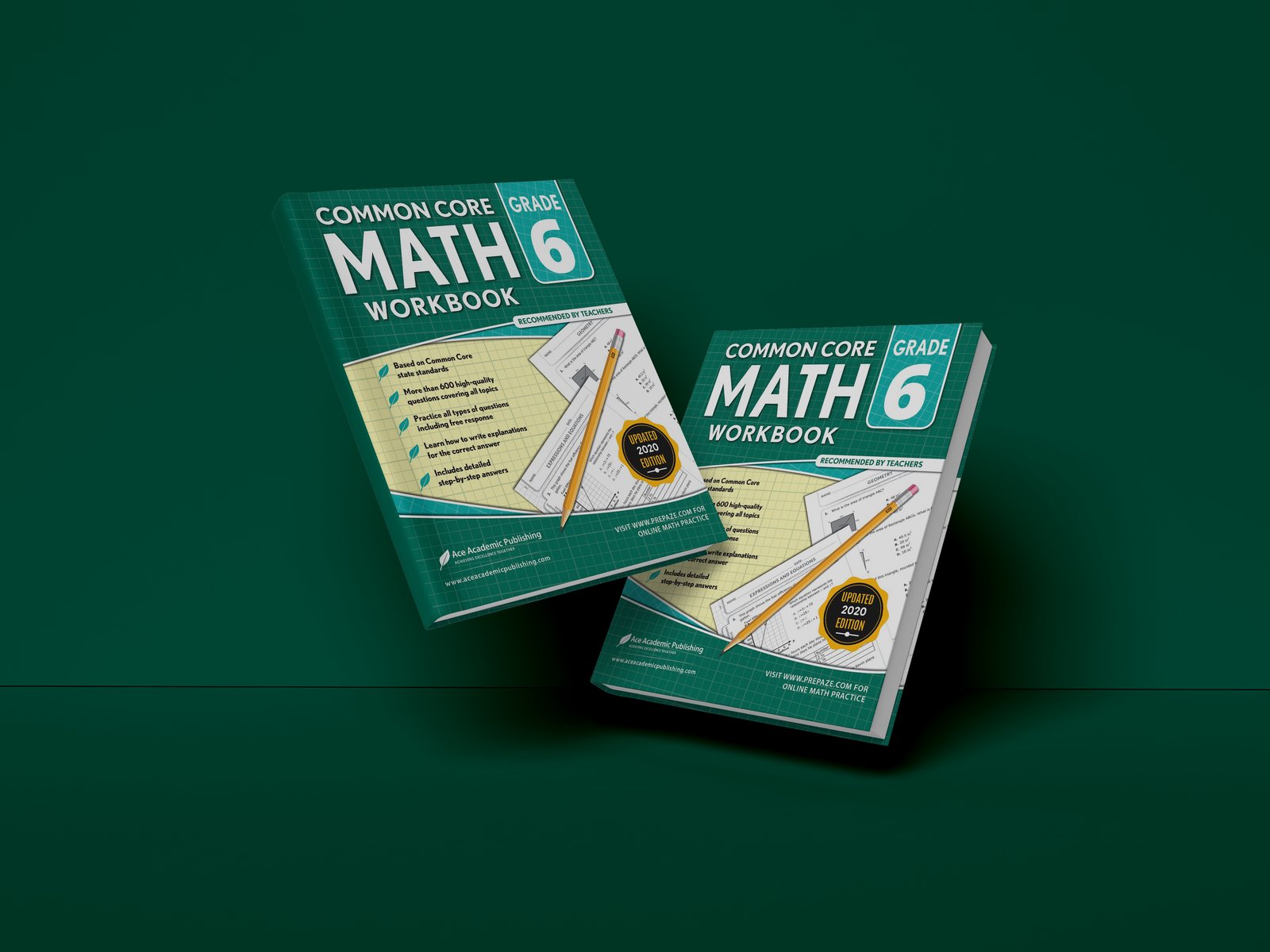
One of the biggest questions new homeschoolers ask is: "How do I know I'm covering everything?" Standards-aligned homeschool workbooks answer that question by giving you a ready-made scope and sequence for each grade, so you can teach with confidence that your child is learning what their peers are learning.
Why standards-aligned workbooks work for homeschooling
Common Core workbooks map to the same learning goals used by most U.S. schools. That means when you use a grade-level math or ELA workbook, you're covering the skills a child would learn in a traditional classroom—without having to build a curriculum from scratch. Answer keys with explanations make it easy to teach even subjects you find challenging yourself.
Building a complete homeschool plan
- Math: a grade-level Common Core math workbook for daily practice, plus Math Adventures for exploration.
- ELA: a Common Core ELA workbook covering reading, grammar, vocabulary, and writing.
- All subjects in one: The One Big Book combines English, Math, and Science for a single grade—ideal for a streamlined day.
- Early learners: alphabet, numbers, sight words, and simple math titles build the foundations.
- Extra practice: printable worksheets for targeted skills.
Creating a daily routine
Young children thrive on predictable rhythms. A simple block schedule—math, then ELA, then a special (science, art, reading)—keeps the day moving. Aim for focused, shorter sessions rather than long ones: two 20-minute math blocks beat one exhausting hour. Use each workbook's topic tests as weekly checkpoints.
Tracking progress
Because our workbooks include multiple tests per topic and two full-length tests, you have built-in assessments. Keep a simple log of scores to spot patterns—if a topic test reveals a gap, revisit that section before moving on. This mastery-based approach is one of homeschooling's biggest advantages.
Homeschool co-ops and group buying
Many co-ops buy workbooks together to save. We offer bulk pricing for homeschool groups, tutoring centers, and schools—request a bulk quote with your quantities.
Ready to build your plan? Start with our full catalog of standards-aligned workbooks for Grades K–12.
A simple weekly schedule that works
You don't need a complicated plan. A reliable rhythm looks like this: Monday through Thursday, do one math topic and one ELA passage or writing exercise (about 30–45 minutes total), and reserve Friday for the workbook's topic tests and a fun review game. Every few weeks, use a full-length practice test as a checkpoint. This structure gives you a built-in scope and sequence, clear checkpoints, and plenty of room for read-alouds, projects, and field trips around it.
Tracking progress without the stress
Because each workbook is organized by standard and includes answer keys, progress tracking is built in. Keep a simple one-page log: the date, the topic, and a quick note ("mastered" / "review needed"). Over a semester this becomes a portfolio that documents growth—useful for your own planning and for any reporting your state requires. The goal isn't grades; it's noticing which skills are solid and which need one more pass.
Frequently asked questions
Do workbooks replace a full curriculum? They provide a standards-aligned backbone for math and ELA; many families pair them with living books, projects, and hands-on science. What if we start mid-year? That's fine—use the topic tests to find the right starting point rather than beginning on page one. Are answer keys included? Yes, with explanations, so you can hand a child the book and step back.
The One Big Book or separate workbooks?
Two families, two good answers. Choose The One Big Book—English, Math, and Science for a single grade in one volume—when you want the simplest possible day, a lighter backpack, and one place to track everything; it's ideal for younger students and for parents juggling multiple children. Choose separate subject workbooks when a child is ahead in one subject and on-level in another (say, a strong reader who needs more math practice), because you can mix grade levels to fit the actual student rather than the average one. Some families even do both: The One Big Book as the daily core, plus a single-subject workbook for the area that needs extra depth.
Staying motivated over a long year
Homeschool momentum fades in February, not September—so build in visible wins. Let your child color in a simple progress chart as they finish each topic, celebrate full-length practice tests as milestones rather than exams, and rotate in the exploration-based Math Adventures series when straight practice starts to feel routine. A predictable rhythm plus small, frequent wins is what carries a family through the whole year.